| Título : |
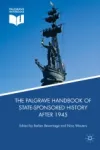
The Palgrave Handbook of State-Sponsored History After 1945 |
| Tipo de documento: |
documento electrónico |
| Autores: |
Bevernage, Berber, ; Wouters, Nico, |
| Mención de edición: |
1 ed. |
| Editorial: |
London [UK] : Palgrave Macmillan UK |
| Fecha de publicación: |
2018 |
| Número de páginas: |
XXV, 877 p. 17 ilustraciones, 8 ilustraciones en color. |
| ISBN/ISSN/DL: |
978-1-349-95306-6 |
| Nota general: |
Libro disponible en la plataforma SpringerLink. Descarga y lectura en formatos PDF, HTML y ePub. Descarga completa o por capítulos. |
| Palabras clave: |
Historia Moderna Historia mundial Historia militar Historia social Civilización Historia moderna Historia Mundial Historia Global y Transnacional Historia cultural |
| Índice Dewey: |
909.08 |
| Resumen: |
Este manual proporciona el primer análisis integrado sistemático del papel que desempeñan los estados o los actores estatales en la construcción de la historia y la memoria pública después de 1945. El libro se centra en muchas formas diferentes de historia patrocinada por el estado, incluidas leyes de memoria, monumentos y memoriales, -archivos, políticas científicas, historia en las escuelas, comisiones de la verdad, comisiones de expertos históricos, el uso de la historia en cortes y tribunales, etc. El manual contribuye al estudio de la historia y la memoria pública combinando elementos de investigación centrada en el Estado en campos separados de estudiar. Al examinar las capacidades conmemorativas del Estado, el libro introduce una perspectiva analítica que no suele encontrarse en los estudios clásicos del Estado. El manual tiene un amplio enfoque geográfico y analiza casos de diferentes regiones del mundo. El volumen aborda principalmente contextos democráticos, aunque no excluyen los regímenes dictatoriales. . |
| Nota de contenido: |
State-Sponsored History after 1945: An Introduction – Berber Bevernage and Nico Wouters -- Part 1: Memory Laws and Legislated History -- Overview Chapter -- Laws Governing the Historian's Free Expression – Antoon De Baets -- Case Studies -- Writing History through Criminal law: State-Sponsored Memory in Rwanda – Pietro Sullo -- French memory laws and the ambivalence about the meaning of colonialism – Stiina Löytömäki -- History Watch by the European Court of Human Rights – Pierre-Olivier de Broux and Dorothea Staes -- Legislated History in Post-Communist Lithuania – Tomas Balkelis and Violeta Davoliūtė -- Part 2: Archives and Libraries -- Overview Chapter -- Archives, Agency and the State – Trudy Huskamp Peterson -- Case Studies -- Open Archives to Close the Past: Bulgarian archival disclosure on the road to European Union accession – Niké Wentholt -- Archives and Post-Colonial State-Sponsored History: A dual state approach using the case of the "Migrated Archives" – Michael Karabinos -- The "Cleansing" of Croatian Libraries in the 1990s and Beyond or How (Not) to Discard the Yugoslav Past – Dora Komnenović -- Part 3: Research Institutes and Policies -- Overview Chapter -- State Authority and Historical Research. Institutional Settings and Trends since 1945 – Lutz Raphael -- Case Studies -- Official History Reconsidered: The Tadhana Project in the Philippines – Rommel A. Curaming -- History riding on the waves of government coalitions. The first fifteen years of the Institute of National Remembrance in Poland (2001-2016) – Idesbald Goddeeris -- Part 4: Schools, Curricula and Textbooks -- Overview Chapter -- History in Schools – Peter Seixas -- Case Studies -- History teaching for the unification of Europe: The case of the Council of Europe – Luigi Cajani -- Teaching History under Dictatorship: The Politics of Textbooks and the Legitimation of Authority in Mobutu's Zaire – Denise Bentrovato -- The "National Dream" to Cultural Mosaic: State-Sponsored History in Canadian Education – Lynn Lemisko & Kurt W. Clausen -- China's history school curricula and textbook reform in East Asian context -- Gotelind Müller -- Teaching History in Israel-Palestine – Achim Rohde -- Part 5: Museums and Musealisation -- Overview Chapter -- History Museums – Ilaria Porciani -- Case Studies -- "State-supported history" at the local level: Ostdeutsche Heimatstuben and expellee museums in West Germany – Cornelia Eisler -- State Agency and the Definition of Historical Events: the case of the Museo de la Memoria y los Derechos Humanos in Santiago, Chile – Patrizia Violi -- History Wars in Germany and Australia: National Museums and the Re-legitimisation of nationhood – Christian Wicke and Ben Wellings -- Part 6: Memorials, Monuments and Heritage -- Overview Chapter -- Memorials and state-sponsored history – Shanti Sumartojo -- Case Studies -- Spaces of nationhood and contested Soviet war monuments in Poland: the Warsaw Monument to the Brotherhood in Arms – Ewa Ochman -- Heritage Statecraft: transcending methodological nationalism in the Russian Federation – Gertjan Plets -- Part 7: Courts, Tribunals and Judicial History -- Overview Chapter -- The State, the Courts, and the Lessons of History: An Overview, with Reference to Some Emblematic Cases – Richard J. Golsan -- Case Studies -- The Historian's Trial: John Demjanjuk and the Prosecution of Atrocity – Lawrence Douglas -- Germany vs. Germany: Resistance against Hitler, Postwar Judiciary and the 1952 Remer Case – Vladimir Petrovic -- Historical Testimony for the Government in US v. Philip Morris, et al. – Ramses Delafontaine -- A one-sided coin: A critical analysis of the legal accounts of the Cypriot conflicts – Nasia Hadjigeorgiou -- Part 8: Truth Commissions and Commissioned History -- Overview Chapter -- Truth Commissions and the Construction of History – Eric Wiebelhaus-Brahm -- Case Studies -- Truth Commissions and the Politics of History: A Critical Appraisal – Stephan Scheuzger -- The Brazilian National Truth Commission (2012-2014) as a state-commissioned history project -- Nina Schneider and Gisele Iecker de Almeida -- The 9/11 Commission Report: History Under the Sign of Memory – Oz Frankel -- Truths of the Dictatorship: Chile's Rettig and Valech Commissions as State-Sponsored History – Onur Bakiner -- Part 9: Historical Expert Commissions and Commissioned History -- Overview Chapter -- Historical Expert Commissions and their Politics – Eva-Clarita Pettai -- Case Studies -- Reconstituting the Dutch State in the NIOD Srebrenica Report – Erna Rijsdijk -- Memory institutions and policies in Colombia: The historical memory group and the historical commission on the conflict and its victims – Martha Cecilia Herrera, José Gabriel Cristancho and Carol Juliette Pertuz -- Diversified and Globalized Memories: The Limits of State-Sponsored History Commissions in East Asia – Seiko Mimaki -- Switzerland's Independent Commission of Experts: State-Sponsored History and the Challenges of Political Partisanship – Alexander Karn -- Part 10: Official Apologies and Diplomatic History -- Overview Chapter -- Historical state apologies – Azuolas Bagdonas -- Case Studies -- Apology Failures: Japan's Strategies towards China and Korea in Dealing with its Imperialist Past – Torsten Weber -- The "Apology to Australia's Indigenous Peoples" in its Historical Context -- Francesca Dominello -- Narrative Robustness, Post-Apology Conduct, and Canada's 1998 and 2008 Residential Schools Apologies – Matt James. |
| En línea: |
https://link-springer-com.biblioproxy.umanizales.edu.co/referencework/10.1057/97 [...] |
| Link: |
https://biblioteca.umanizales.edu.co/ils/opac_css/index.php?lvl=notice_display&i |
The Palgrave Handbook of State-Sponsored History After 1945 [documento electrónico] / Bevernage, Berber, ; Wouters, Nico, . - 1 ed. . - London [UK] : Palgrave Macmillan UK, 2018 . - XXV, 877 p. 17 ilustraciones, 8 ilustraciones en color. ISBN : 978-1-349-95306-6 Libro disponible en la plataforma SpringerLink. Descarga y lectura en formatos PDF, HTML y ePub. Descarga completa o por capítulos.
| Palabras clave: |
Historia Moderna Historia mundial Historia militar Historia social Civilización Historia moderna Historia Mundial Historia Global y Transnacional Historia cultural |
| Índice Dewey: |
909.08 |
| Resumen: |
Este manual proporciona el primer análisis integrado sistemático del papel que desempeñan los estados o los actores estatales en la construcción de la historia y la memoria pública después de 1945. El libro se centra en muchas formas diferentes de historia patrocinada por el estado, incluidas leyes de memoria, monumentos y memoriales, -archivos, políticas científicas, historia en las escuelas, comisiones de la verdad, comisiones de expertos históricos, el uso de la historia en cortes y tribunales, etc. El manual contribuye al estudio de la historia y la memoria pública combinando elementos de investigación centrada en el Estado en campos separados de estudiar. Al examinar las capacidades conmemorativas del Estado, el libro introduce una perspectiva analítica que no suele encontrarse en los estudios clásicos del Estado. El manual tiene un amplio enfoque geográfico y analiza casos de diferentes regiones del mundo. El volumen aborda principalmente contextos democráticos, aunque no excluyen los regímenes dictatoriales. . |
| Nota de contenido: |
State-Sponsored History after 1945: An Introduction – Berber Bevernage and Nico Wouters -- Part 1: Memory Laws and Legislated History -- Overview Chapter -- Laws Governing the Historian's Free Expression – Antoon De Baets -- Case Studies -- Writing History through Criminal law: State-Sponsored Memory in Rwanda – Pietro Sullo -- French memory laws and the ambivalence about the meaning of colonialism – Stiina Löytömäki -- History Watch by the European Court of Human Rights – Pierre-Olivier de Broux and Dorothea Staes -- Legislated History in Post-Communist Lithuania – Tomas Balkelis and Violeta Davoliūtė -- Part 2: Archives and Libraries -- Overview Chapter -- Archives, Agency and the State – Trudy Huskamp Peterson -- Case Studies -- Open Archives to Close the Past: Bulgarian archival disclosure on the road to European Union accession – Niké Wentholt -- Archives and Post-Colonial State-Sponsored History: A dual state approach using the case of the "Migrated Archives" – Michael Karabinos -- The "Cleansing" of Croatian Libraries in the 1990s and Beyond or How (Not) to Discard the Yugoslav Past – Dora Komnenović -- Part 3: Research Institutes and Policies -- Overview Chapter -- State Authority and Historical Research. Institutional Settings and Trends since 1945 – Lutz Raphael -- Case Studies -- Official History Reconsidered: The Tadhana Project in the Philippines – Rommel A. Curaming -- History riding on the waves of government coalitions. The first fifteen years of the Institute of National Remembrance in Poland (2001-2016) – Idesbald Goddeeris -- Part 4: Schools, Curricula and Textbooks -- Overview Chapter -- History in Schools – Peter Seixas -- Case Studies -- History teaching for the unification of Europe: The case of the Council of Europe – Luigi Cajani -- Teaching History under Dictatorship: The Politics of Textbooks and the Legitimation of Authority in Mobutu's Zaire – Denise Bentrovato -- The "National Dream" to Cultural Mosaic: State-Sponsored History in Canadian Education – Lynn Lemisko & Kurt W. Clausen -- China's history school curricula and textbook reform in East Asian context -- Gotelind Müller -- Teaching History in Israel-Palestine – Achim Rohde -- Part 5: Museums and Musealisation -- Overview Chapter -- History Museums – Ilaria Porciani -- Case Studies -- "State-supported history" at the local level: Ostdeutsche Heimatstuben and expellee museums in West Germany – Cornelia Eisler -- State Agency and the Definition of Historical Events: the case of the Museo de la Memoria y los Derechos Humanos in Santiago, Chile – Patrizia Violi -- History Wars in Germany and Australia: National Museums and the Re-legitimisation of nationhood – Christian Wicke and Ben Wellings -- Part 6: Memorials, Monuments and Heritage -- Overview Chapter -- Memorials and state-sponsored history – Shanti Sumartojo -- Case Studies -- Spaces of nationhood and contested Soviet war monuments in Poland: the Warsaw Monument to the Brotherhood in Arms – Ewa Ochman -- Heritage Statecraft: transcending methodological nationalism in the Russian Federation – Gertjan Plets -- Part 7: Courts, Tribunals and Judicial History -- Overview Chapter -- The State, the Courts, and the Lessons of History: An Overview, with Reference to Some Emblematic Cases – Richard J. Golsan -- Case Studies -- The Historian's Trial: John Demjanjuk and the Prosecution of Atrocity – Lawrence Douglas -- Germany vs. Germany: Resistance against Hitler, Postwar Judiciary and the 1952 Remer Case – Vladimir Petrovic -- Historical Testimony for the Government in US v. Philip Morris, et al. – Ramses Delafontaine -- A one-sided coin: A critical analysis of the legal accounts of the Cypriot conflicts – Nasia Hadjigeorgiou -- Part 8: Truth Commissions and Commissioned History -- Overview Chapter -- Truth Commissions and the Construction of History – Eric Wiebelhaus-Brahm -- Case Studies -- Truth Commissions and the Politics of History: A Critical Appraisal – Stephan Scheuzger -- The Brazilian National Truth Commission (2012-2014) as a state-commissioned history project -- Nina Schneider and Gisele Iecker de Almeida -- The 9/11 Commission Report: History Under the Sign of Memory – Oz Frankel -- Truths of the Dictatorship: Chile's Rettig and Valech Commissions as State-Sponsored History – Onur Bakiner -- Part 9: Historical Expert Commissions and Commissioned History -- Overview Chapter -- Historical Expert Commissions and their Politics – Eva-Clarita Pettai -- Case Studies -- Reconstituting the Dutch State in the NIOD Srebrenica Report – Erna Rijsdijk -- Memory institutions and policies in Colombia: The historical memory group and the historical commission on the conflict and its victims – Martha Cecilia Herrera, José Gabriel Cristancho and Carol Juliette Pertuz -- Diversified and Globalized Memories: The Limits of State-Sponsored History Commissions in East Asia – Seiko Mimaki -- Switzerland's Independent Commission of Experts: State-Sponsored History and the Challenges of Political Partisanship – Alexander Karn -- Part 10: Official Apologies and Diplomatic History -- Overview Chapter -- Historical state apologies – Azuolas Bagdonas -- Case Studies -- Apology Failures: Japan's Strategies towards China and Korea in Dealing with its Imperialist Past – Torsten Weber -- The "Apology to Australia's Indigenous Peoples" in its Historical Context -- Francesca Dominello -- Narrative Robustness, Post-Apology Conduct, and Canada's 1998 and 2008 Residential Schools Apologies – Matt James. |
| En línea: |
https://link-springer-com.biblioproxy.umanizales.edu.co/referencework/10.1057/97 [...] |
| Link: |
https://biblioteca.umanizales.edu.co/ils/opac_css/index.php?lvl=notice_display&i |
|  |
 The Palgrave Handbook of State-Sponsored History After 1945